Monday, February 22, 2021

Puerto Escondido

From Oaxaca City we took a night bus around the mountains to the coastal town of Puerto Escondido (which translates 'Secret Port'). 
Its one of the larger beach towns in Oaxaca, the main beach Zicatela stretching 4km. Unlike the carribean coast this beach has waves and is famed for its surf. However Zicatela beach has a strong current and strong rip and is not recommended for beginners so we gave it a miss. 


Our hotel was nicely situated close to Carrizallio Beach, a beautiful inlet ideal for lounging and swimming.

Although Puerto Escondido is a touristic town it is far less developed than any of the places we visited in Yucatan and as a result was far more pleasant, and cheap. There is more of a laid back vibe, the kind of atmosphere that backpackers and surfers bring. This is not a town that attracts wealthy Americans. Puerto is also hotter than the carribean coast, days hitting up to 34 degrees Celsius while we were there. The sea however was colder but very refreshing given the heat. The coldness of the Irish sea had become unimaginable! Being on the west coast we were now in the perfect position to watch Mexico's stunning sunsets from the beach. 


We only spent five days in Puerto and did very little other than eat swim and learn some Spanish. My teacher was a multi lingual, bubbly Mexican, would wear her mask on the walk to class but take it off for our classes. She warned me that masks had just become obligatory in the town in public places, just for the month. We mused over the pandemic, she found Europe's approach baffling and laughed at how paranoid and depressed the lockdowns were making people in Europe. 'My friends and I think it's because of your climate, if you had sun you would be happier!'
There was a sense of pride amongst her and her friends that people were fleeing to Mexico to escape lockdowns in their own countries. 
'Mexicans know that life is too short!' she told me. 


On Playa Bacocho you can visit a turtle reserve where you can release a baby turtle into sea. Although most will get eaten once they make it to the sea it's incredibly adorable to watch them wriggle their way across the sand.

On our last day in Puerto we also did a day tour to Chacahua. We boated through mangroves and were left for several hours in what can only be described as a shanty town close to Chacahua. We could see Chacahua's beautiful stretch of beach dotted with surfers and it certainly looked amazing. Once night fell we took a boat back through the mangroves in search of bioluminesants but unfortunately due to the almost full moon they weren't visible.
To compensate for the disappointing tour, we had an evening of mescalritas and live Jazz! The thrill of live music still hadn't gotten old! 


Friday, February 19, 2021

Oaxaca City

After Holbox we made our way to Cancun for a brief overnight stay in the unglamorous downtown area, next to the bus station so we could make our escape the next morning to Cancun airport. From there we were able to fly to the city of Oaxaca (WHA-hackaa) .
Oaxaca city is in the state of Oaxaca and is a 2 hour plane ride west of Cancun. Before leaving for Mexico plenty of friends had told me Oaxaca was their favourite city in Mexico, and it was easy to see why.

The city is surrounded by stunning scenery, with mountains everywhere you look. The buildings in Oaxaca are low, one or two story and colonial in style. There are fabulous churches and cathedral dotted around the city as well and beautiful open parks and leafy trees line the streets. Some streets are cobblestoned, there are no street signs and traffic lights are difficult to spot as they've been thoughtfully assimilated into the streetscape. Given its height it is cooler than the coast. The weather while we were there in mid January was similar to an Irish summer, in the low twenties.
On our first day Jonny was already talking about extending our stay he loved it so much, saying it was the first time he felt he was really in Mexico. The people were far more laid back than the Yucatan, nobody hassles you to buy anything which makes for a fair more enjoyable visit. 

Oaxaca city is famous for two things, its food and its street art. Originally artist of the city used it as a form of protest, and still do, but also general social commentary. Unlike other cities, Oaxaceño artists mostly use posters of blown up lino prints to decorate the walls of the city. The city is full of printmaking workshops and galleries where you can view or buy original art.

Oaxacas food also famed to be the best in Mexico, and it certainly was fair superior to the general fair we got in Quintana Roo. There speciality is mole sauce, of which there are seven types. It is a thick brown sauce used as a marinade or a compliment to dishes. They also have a Oaxacan goats cheese, which is rubbery but tasty.

There are many fantastic restaurants to dine in Oaxaca, but almost every evening we frequented them we were practically the only ones there. Oaxaca was quiet, very quiet. It is usually a very popular tourist destination but for some reason has been the quietest destination we've been to in Mexico so far. 
Oaxaca was in Orange for Covid restrictions but we were learning Orange means very different things for each city and town. In Oaxaca this meant alcohol only bars had to close at 6pm and all museums and the botanic gardens were closed, which was very disappointing as Oaxaca is famed for its museums and art.

Now that the honeymoon phase of our trip was over, we decided to adopt more of a 'living' in Mexico approach. We rented a gorgeous airbnb in the city which centered around an open courtyard. We would stay for 10 days and settled into a nice routine. Jonny would get up early and work till the afternoon and I would head off to spanish classes at Becari Language school.

I loved my classes and my two teachers gave me a fascinating insight into life in Oaxaca. Eloy thought me for an hour in the morning, he was an energic, slightly camp, outgoing Oaxeño who loved telling me about his dates and love interests in Oaxaca and around the world. But his heart at the time was taken by a mexican man in Mérida who was currently in another relationship. He said he loved our classes because I was so intelligent, so naturally with praise like that we hit it off.
One day in class Eloy got a phone call from one of his cousins looking for money. He told me his cousin had married young and now had two children they couldn't afford. His cousin was 20 and his wife was just 13 when they married. He told me young marriages were a big problem in Oaxaca state, particularly in the Pueblos (villages) around the city. In Mexico 1 in 4 women marry under the age of 16.
At 26 Eloys family couldn't understand why he didn't have a girlfriend. He laughed light heartedly 'they don't know that I'm the one who's a girlfriend!'.

Alix was an adorable young soft spoken man who on his introduction let me know he goes by the pronoun 'he/him' and was keen to not cause offense during our conversation. He was incredibly sweet and surprised me by telling me at the end of our first class it was his first time teaching in the school. He was an incredible teacher who made up games, played his favourite Spanish songs for me and short cartoons and wouldn't entertain any English in our classes. He was incredibly sweet and told me he was closer to his mother than his father, who was a very traditional violent man. 

In the afternoons Jonny and I would explore the city. Oaxaca is a beautiful city to simply walk around in, the street art makes it a living gallery. There are plenty of small 'Mescalrias' where you can stop to sip a mescal. There's also a great Mirador up what feels like a million steps which overlooks the whole city and is a beautiful view for sunset. 

While up there one evening we got chatting to another group of tourists after Sharif, a lively American offered us a beer. The group included 3 Americans, an English girl, a Welsh girl and a guy from Galway. Philip had only been in Mexico 4 days and already incredibly happy with his decision. He was a smily sweet guy in his early 20's and we compared notes on the horrors of lockdown in Ireland. A photo of him and some friends made front page in his small towns local newspaper when they were celebrating a win for the town in the GAA club finals. The team and some fans, including Philip, had caught covid from the celebrations. His family also ended up catching it but fortunately nobody was particularly sick. 

He brought us and the whole group to a famous street food stand which specialised in another Oaxaca delicacy, the Tlayuda. A Tlayuda is a large tortilla wrap filled with meat, cheese, cream, refried beans, avacado and tortilla is folded once and then charcoal grilled on the outside and is absolutely delish. 

Another popular tourist activity around Oaxaca city is to hike between the Pueblos. However during our stay this wasn't possible because of covid. Understandably these remote and isolated mountain villages decided welcoming tourists in at this time was a bad idea. Instead we did one day hike with a Belgian man who runs a hiking business in the region and local villager who led the way. The hike itself wasn't very interesting, it began promisingly with beautiful views of the mountains but we went down and up the same route, the highlight being our Mexican guides cows which reside at the bottom of the mountain beside a stream.    Stories about previous hiking disasters were however highly entertaining. He'd point out plants to avoid, one which could cause a severe reaction if it brushed against your skin. He gleefully told us of a girl who had a fit during a hike after an encounter. 'What do you do when something like that happens during a hike?!' I asked. 
'Yes, it's not good!' is all he responded and then went onto tell us about a couple he had hiked with on a couple of occasions in Mexico. They had returned to find somewhere to settle in Mexico and he had taken them to the Pacific Coast of Oaxaca (where we would continue onto next). The couple fell in love with the area and were having a lovely trip until the mans heart stopped while out for a swim in the ocean. 'But he died with a smile on his face!' our guide told us. 
But then the circus that is rural Mexico kicked in. By the time they managed to retrieve the mans body from the ocean it had, in our guides words, 'fermented' because of the heat. They then needed a doctor to call the death and make the relivant paper work. It was a small village with only one doctor and nobody knew were the doctor was. Our guide began asking around and eventually someone brought him to the local nighclub where he found the doctor who was very drunk. After some money was exchanged the doctor reluctantly agreed to call the death and sign the paperwork. 

Luckily the deadman had wanted to be cremated, but they would need an undertaker to take care of the body until it could be brought back to Oaxaca City for the cremation. And so a fight broke out between the two Undertakers in the village as to who would get to take the man's body. Of course it being a white dead body they would be able to charge more. The verbal fight quickly turned into a fist fight in the streets!
The winning undertaker assured our guide and the new widow that he had a fridge to store the body in. He would take the body and store it until they could get it to Oaxaca. So he took the body and stored it, but much to the horror of our guide when he brought the new widow to say her final fairwells, the fridge wasn't really a fridge at all. The man's body was put in a lidded box and simple surrounded by a couple of ice cubes. The body had began to decompose and the smell and appearance of the man was quite the horror show. Luckily our Guide discovered this before the wife and stopped her from seeing him one last time.
'Once we got him to Oaxaca it all plain sailing, but I advice you not to die in rural Mexico!' our Guide chuckled to himself.

We also visited the Zapotec ruins of Monte Alban. The ruins are completely breath taking and the most impressive ruins yet, set on top of a mountain to the west of Oaxaca City. Monte Albán is one of the oldest civilisations built in the Meso-Americas and was impressively built no where near a water source so its inhabitants relied on a water reservar in built in the cities center. It is thought that it filled by the seasonal rains but at times people climbed down and up the mountain bringing water from the river below.

 It connected with other civilizations through paved trading routes such as Teotihuacan close to Mexico City. 
Luckily Monte Albán remained undiscovered by the Spanish Conquestadors and so it's remains were well preserved.

After a peaceful few days in the spendid Oaxaca it was time to head for the west coast of Mexico where the country meets the Pacific Ocean. 

Sunday, January 31, 2021

Isla Holbox

To get to Isla Holbox we had to take a collectivo from Playa to the small town of where we could catch a ferry across to the island. A Collectivo is a mini van which sort of operates as a shared taxi that only leaves once its full. The driver will do plenty of errands along the way, collecting things in shops from Playa and then dropping them to people in small villages along the way. For that reason it's hard to predict how long a collectivo will take to reach your destination, but ours took two and a half hours which by all accounts wasn't so bad for the distance.

After a quick half hour ferry ride we were at Holbox. Holbox is a narrow and 26 miles long. There are no cars on the island only golf buggies which have had their tyres modified to drive in the sand roads. 75% of the island is natural habitat, consisting of mangroves and long white undeveloped beaches. The beaches are absolutely stunning, and possibly the most beautiful we've seen in all of Mexico. The waters are crystal clear and shallow. The islands main town is adorably quaint and authentic, the locals, the Holboxeños, have fought to keep developers and resorts off the island. It has just enough bars and restaurants to entertain tourists and keeps its natural charm.
There's not much to do on the island, other than relax. Theres no phone signal and the WiFi is almost non existant. The only thing you could maybe complain about is it's a bit on the expensive side, especially for accommodation which is probably down to its limited availability. Our hotel was about a 10 minute walk along unlit sand roads from the islands only town, but was right by the beach.


The island is a home to an incredible amount of birds. From small hummingbirds and colourful parrots to herons, pelicans and cormorants which you could happily watch all day diving for fish in the sea. While on the island we took a boat tour out to three other tiny islands, one which homes a mangrove and hotsprings, and two islands including Isla Pájaros which are solely habitats to birds. At the right time of year flamingos can be found, but we had just missed them, but maybe given my luck with flamingos it wasn't a bad thing! 

After nearly 5 weeks of a solid carnivorous diet, Jonny shocked me by suggesting we dine in the two vegan/vegetarian restaurants in town. Both were excellent but "Náay" in particular offeed amazing Mexican vegetarian flavours.


 I was amazed at how difficult it was to get seafood in the evenings on the island. The seafood restaurants would open during the day but close for nightfall. I could only guess it was due to Mexican eating habits. Most Mexicans typically have 5 meals a day. The earliest around 8am is usually fruit, bread or tacos. At 10.30/11 its a most substantial breakfast usually containing eggs, or chilaquiles (nacho chips/crisps covered in salsa verde or rojo, onions, cheese and cream, delish) or 'hot cakes' which are pancakes but for some reason are called hot cakes and not translated into Spanish. At about 2 they have their main meal of the day, which will usually be meat, rice and beans but varies depending on the region. Around 6pm is a snack which is cake or bread and 10pm another very important meal which is typically tacos or any of the number of variations of soft corn wrap with meat and spicy salsa. Mexicans also drink an incredible amount of Coca Cola, they claim its the national drink. It's such a problem here that it's the only country in the world that managed to convince coca cola to reduce the sugar content in the 'original' version for sale in Mexico. The fact that three quarters of Mexicans are overweight or obese probably has something to do with it. 

Our last day in Holbox was to be out 3rd last night in Mexico. Over the last couple of weeks we'd been reading about the worsing covid situation in Ireland. The Christmas celebration had brought with it an explosion of cases and the country returned into the strictest level 5 lockdown yet, after only three weeks of being open. We decided another few weeks in Mexico would be a good idea and so extended our returning flight! 


Friday, January 29, 2021

Playa Del Carmen

Our aim after Bacalar was to go to Isla Holbox, and island north of Cancun. But there was no direct bus route so we decided to stop in the famous Playa Del Carmen for two nights to break up the journey.
Playa Del Carmen, like Cancun, is not Mexico. Other than the souvenirs, you could easily mistake it for a coast in America. 
The famous tourist road is even called '5th Avenue'. The only 'Avenue' I've come across in all of Mexico. Along this street you'll find every imaginable American chain and franchise, American Eagle, IHOP, Forever 21, Burger King, you name it, Playa has it. It's a long street and outside every shop/restaurant/bar and nightclub someone is shouting at you trying to get you to come in.

The beach in Playa Del Carmen however its beautiful and no doubt what first attracted tourists before it became an over developed playground for unadventurous Americans seeking adventure abroad.
We decided to do the only thing that Playa Del Carmen was good at. Party.
We met up with Kevin, who we'd met in Mérida, he happened to arrive the same day as us. We had a few drinks and recounted our adventurous journey back from the flamingos.
We then went onto Tequilla Bar, which promised girls dancing on table tops. There we bumped into an Irish guy called Sam and his Polish friend Natalie who we'd met briefly in Tulum on News Years night, when Sam approached us looking for his bank card he'd lost. In Playa he told us the next morning he woke to remember he hadn't taken it out with him at all, it had been in his hostel the whole time!
We all ended up in a Nightclub, dancing to terrible but recognisable pop songs, a rarity in Mexico. It was beyond fun, for the simple joy of being able to dance with others. Soon our dance circle had grown to include strangers and locals.

Once that nightclub ended, one of our new local friends took us to another roof top club, where we danced and chatted until the small hours of the morning.
The next day delivered the greatest hangover so far in Mexico. Our plan to visit Isla Cozumel for the day (apparently a very nice island off the coast of Playa) were abandoned.
And that would be enough of Playa Del Carmen! 

Thursday, January 21, 2021

Bacalar

We traveled 3 hours south close to the Beliz border to the small town of Bacalar. We would only spend 2 nights, but two nights were enough to explore this adorable town. The big tourist attractions of Bacalar is its enormous lake. It is proudly know as the lake of 7 colours by locals. However the most recent hurricane which hit in November had apparently disturbed the silt at the bottom of the lake making it more like the lake of 2 colours, but it was none the less beautiful.

After our coffin ship bedroom in Tulum we (or more like I) decided we were due a bit of luxury. We booked a small cabaña at Rancho Encantado which opened up right onto the lake. The cabaña was adorable with a thatched roof, a four poster bed and an outdoor jacuzzi. If we rathered fresh water we could climb down the ladder right outside our own front door into the lake. It was bliss.
There's not much to do in Bacalar, other than enjoy the lake, but after the madness of Tulum it was just what we needed.
We took one of the hotels double canoes one afternoon and rowed about 5km across the lake. After five years together, Jonny finally got to show off his famous rowing skills. We also visited the Fuerte de San Felipe, an 18th-century fort at the center of the town. It was built by the spanish, who destroyed the indigenous community, a story which is repeated throughout every town and city we visited.
Bacalar gave us a brief but well deserved rest and the most 'honeymoon' experience we'd had yet.

Sunday, January 10, 2021

Tulum

We would spend the longest amount of time on our travels in Tulum, 11 days in total and would be there for Christmas and New Years. There is alot of hype about Tulum, friends who had visited Mexico in the past sung its praises and Instagram is a wash with photos of its beautiful beaches and art installations. I had been advised not to visit at Christmas and New Years as it was the busiest season and everything becomes very expensive. But wanting to be somewhere great for the festivities as well as having tickets to New Years Eve music festival in Tulum made it the place we had to be.
Tulum has a reputation for being a cool little hippy town, with adorable little cabaña huts on the beach and fantastic parties. And in some ways that is true, or at least traces of it remain. Its perfectly situated for visiting the many Cenotes and Mayan ruins which are close by. It has a beautiful beach, which stretches for miles, some great, very trendy, restaurants and shops and plenty of instagram opportunities.
 But in many ways its a victim of its own success. The cute little cabaña cost anywhere from €600 to €1200 a night during the Christmas season. So we stayed in the town for our stay, which is more affordable, but still expensive by Mexican standards. The town is 5 km from the beach so to get around we rented a scooter we called our little 'Moto' and it was more of a blessing than we could have initially realised. The beach road stretches for 10.5 km (as does the beautiful beaches) but it is a nightmare for anyone who uses it, particularly for the high season. The businesses on it are high end, pricey affairs but the road is a narrow, pothole ridden track and is no way adequate for the massive volumes of traffic. There is no footpath along it, so you have pedestrians, cyclists, scooters, cars and trucks all competing which makes it very unpleasant. But with little Moto we could weave in and out of traffic. We heard stories of people being stuck on buses for 2 hours trying to get to the beach.
The beach is split into two zones, the archeology side, which has mayan ruins and easy access to the public beaches. The second is zona hotel side, which crammed with restaurants and hotels. The beach access has been blocked off by all the hotels, despite the beach being public, but if your a brazen Irish couple you'll have no problem using the hotel carparks for free and walking through a hotel to get to the beach.

For our first 6 days in Tulum we stayed in a lovely hostel called Mimosa which was run by an Australian man who had opened it a year ago. We were his first honeymoon couple and he was very excited it have us. Flowers and sparkling wine greated us in our room when we checked in. The next day Jonny would be struck down with the same mystery gasto infliction I had in Mérida, which would also last for 24 hours. I spent the day nursing him as best I could, as he had done for me. I only ventured out for breakfast. I got chatting to the two other people at the breakfast table, one was Carrie, an American who told me she was an astrologist. The other was Frank who was German. They had been deep in discussion about the pandemic when I joined them. When I told them I was Irish they said they had just been discussing the potato famine and how the British orcastrated the whole thing so they could take control of Northern Ireland. I corrected them, telling them Britain already ruled all of Ireland at the time so they didn't need to orcastrate anything, but they certainly didn't help the Irish, sending other crops which were grown in the country to the UK and letting the Irish starve. Instead of accepting the correction, Carrie put it to me that maybe I only believed that because it's what the main stream media in Ireland had told me.

It was going to be a long breakfast.

I silently listened to them discuss how the pandemic was a hoax, how the Mayans had predicted it, that next comes the year of enlightenment when people would 'wake up' to the lies. How Bill Gates wanted mass extinction. Frank spoke of how when he returns to Germany he's going to have to fill out a form for the authorities and he doesn't want to give them his information. I wondered why he had come in the first place. He said he'd have to go back at the start of January for work. He was a teacher. He spoke of how he won't get a PCR test because it's all a cover to just harvest our DNA and plant chips in people. When I told them I'd been getting tested every week in work they looked at me in absolute horror.

Not everyone we met in Tulum had such extreme views on the pandemic but without fail with everyone we met, the conversation would always circle back to it. All European tourists we met (and there was alot) said that they'd come to escape the lockdowns. Some said they couldn't handle it anymore, some already had covid and were making use of their antibodies, some were working remotely and had been there for months. And for anyone wanting to hide from the realities of the world, Tulum was the perfect place. Life was completely normal in Tulum, the old version of normal. Although it was apparently in 'orange', like Mexico City was, we saw no signs of it. Most people didn't even wear masks on the streets, and all businesses, pubs, clubs were operating as normal. Rumour has it, it's down to the cartels heavy financial interest in Tourism. 
The freedoms we had in Tulum was something we took full advantage of on Christmas Day. Unlike home, pretty much everything was open. Christmas Eve is a bigger celebration in Mexico, they traditionally don't have Santa Claus, one Mexican telling me 'he is for the North Americans'. The Nativity plays a more important role, some having a whole room in their home dedicated to life size statues of its characters. Baby Jesus isn't added until Christmas Eve when gifts are exchanged with family and piñatas shaped of strange stars are smashed. 

Our Christmas Day involved drinking DIY Mimosas on the beach, a restaurant in the town for dinner and then onto an amazing music bar called Batey which is famed for its Mojitos and Guarapo. There was a fantastic jazz band playing and the place was packed, we were seated at a table with strangers, which is always a great way to get chatting to people. Charles and his wife were sat at our table, traveling from Texas. Charles was in the military and had travelled to more than 70 countries with work so knew plenty about the world. He was very found of a drink, and for that reason really wanted to come to Ireland. His wife was very quiet to begin with, wearing a mask, which she then confessed was an attempt to stop her from throwing up. They had been drinking all day with new friends they'd made that day on the beach and unlike her husband she wasn't much of a drinker. Luckily Charles had us, and he bought us shots of tequila to celebrate our honeymoon. At some point his wife, after a couple of trips to the bathroom to be sick, insisted they go home. 

The bar only accepted cash so Jonny left in search for bank machine. He was gone so long by the time he returned the band had finished, I had got chatting to them (they were French and Mexican), and they thought my new husband had abandoned me. Jonny eventually returned with cash, and three new friends in tow. A guy called Erin, from Israel, who was living in the States and had been turned away from the Israeli border when trying to get home for Christmas to see his mum, so they both came to Mexico instead for Christmas. And two young English girls who were on holiday, both of which had gotten covid at home from their parents who worked in healthcare. They were still stoned from some brownies they'd had on the beach and were ready for bed until Jonny convinced them to come to a nightclub we'd heard about. 

So off we all set, originally planning to go to the locals nightclub called Chizpa, but instead ending up in the more tourist La Taverna across the road. It was a pre pandemic version of busy, with sweaty tourists feverishly dancing to electronic beats. Initially being in a busy nightclub felt strange, after nearly a year of being told to keep your distance from stranger but quickly the thrill of normality took hold. Jonny and I barely saw each other that night, instead drunk with the excitement of talking to strangers. Jonny would only reappear sporadically to introduce me to particularly interesting strangers. Two of my favourites were the Mexican junior doctors, Jonny spoke in Italian with one who was fluent, and I with my terrible Spanish. They were in Tulum for a couple of days to party, and were flying back to Mexico city the next day at 7pm. Yes the Mexican hospitals were in a bad way with Covid, and no they weren't worried about catching covid in the nightclub. They looked almost confused when we asked 'we have to live', one replied. 
They also told us how they, like all doctors, had to pay money to the cartel. 'Everyone has to pay' the told us. 
When we left at 4am, the party was still going strong.

For the next few days we visited many cenotes which surround Tulum. A cenote is a natural pit, or sinkhole, resulting from the collapse of limestone bedrock that exposes groundwater. Cenotes can be open, semi-open or caves. Most impressively, they were formed when the asteroid that killed the dinasours hit the earth. It hit where the Yucatan peninsula is today. They are incredibly beautiful, magical and other worldly. For some you can swim, snorkel or dive between their underground caved passage ways. My favourites were the Choo-ha and Tankach-ha cenotes outside of Coba, where we also spent a way walking and exploring mayan ruins.
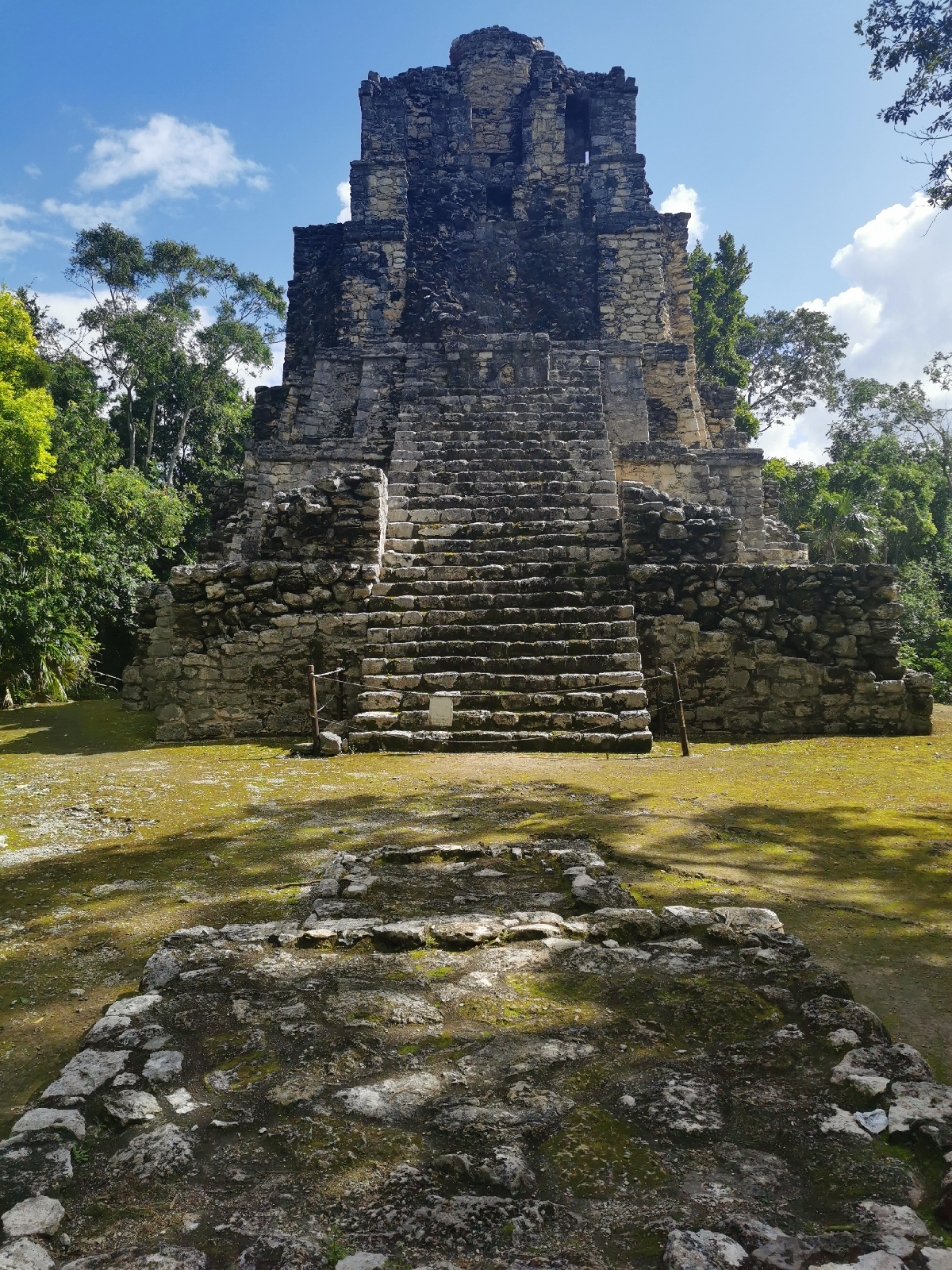
Coming up to New Years Eve we saw an influx of new visitors, we had to move accommodation, and our shoe box room beside a motorway felt more like a coffin ship. It was still more expensive than most places we had stayed so far on our trip. Our New Years Eve Festival, Zamna, which was to happen in the Tulum jungle, was cancelled after some American tourists had gotten covid attending another Tulum festival in November. They blamed Tulum for their sickness and it had gotten some media coverage in the States.

There were plenty of secret parties organised in the jungles for NYE, but we had heard stories of police showing up to previous such parties, looking for bribes, and people being stranded in the jungle. However, finding an affordable New Years event in Tulum was a struggle. The Instagram famous Papaya Playa Project was charging 670 US dollars per person for the night, which included a dinner, but no drinks, and there was a minimum consumption charge. We did venture down to the beach front to explore some options, most charging 150-200 dollars each for a meal. We snuck into a few to see if they were worth the money but most were half empty and not much fun. We even tried a small, unassuming sushi restaurant beside the busy traffic ridden beach road. After we were seated we were told there normal, reasonable menu we had been given wasn't being served that night and instead they were doing a platter of sushi for 150 dollars each.
We left and high tailed it back to the busy town where we found a nice, normally priced restaurant beside the main strip. We bar hoped about the town, ending the night with a street party with music from some amazing street drummers. We then went to La Taverna but they were now charging 50 US dollars to gain entry. 

If you are looking for a good meal along the beach front while in Tulum, Arca is worth worth every penny. For a cheaper meal Sabor Del Mar in the city does amazing seafood. 
After our 11 days, we were more than ready to leave Tulum to venture further south to Bacalar.

Tuesday, January 5, 2021

Mérida

We got the first of many Ado buses to Mérida. They're comfy and spacious and if you're into badly dubbed TV shows, entertaining too.
The city of Mérida would be our only destination in the Yucatan state. Its architecture is European in style but mostly one story in height. Its incredibly safe, the police don't even carry guns.
I had unknowingly booked a hotel, Palacio Secreto, which was Irish owned. We spent the afternoon chatting with the daughter of one of the owners, Anita, who was pregnant with mexican/Irish twins. Her mother and step father had set up the hotel 4 years ago just as Mérida was becoming popular amongst European tourists. Anita had introduced her parents to airbnb for a spare room they had and from that they were inspired to buy and set up a hotel, completely from scratch. The site was little more than a ruin when they bought it and they had transformed it into a really beautiful building, with stone pillars, intricate mosaics and full of stunning antique furniture. 

Later Paul arrived and joined us and Anita. Like Anita he was thrilled to have Irish guests, it had been a while. We were fascinated with their story. Paul is a roscommon man who had owned a popular nightclub in Carrig on Shannon. After the economic crash, and many personal injury claims in the nightclub resulting in sky high insurance, he'd had enough, sold everything and they came to Mexico he told us. He was particularly fond of the lack of a compensation culture in Mexico 'in Ireland if someone sees a hole in the ground, they'll jump into it and it will be the councils fault. In Mexico, if you fall in a hole in the ground, you're the idiot for walking into it!' 
He invited us to come to the Irish Bar 'Kennedys' some evening with him and his partner Martina. He even tried to get them to open early the day of the All Ireland Final but sadly they couldn't. 

Our time in Mérida was spent wandering the streets, parks and markets. The beautiful architecture making everything fascinating. The restaurants are all superb too, specialising in Yucatan dishes. There's many stunning abandoned 18th and 19th Century buildings around the outskirts of Mérida. The rope was made from the henequén plant. Exporting it to Europe made the settlers in Mérida and the town very wealthy, resulting in the stunning homes which can still be seen in the city. At the turn of the 20th Century it was said that Mérida had more millionaire's than anywhere else in the world. The invention of nylon saw the rope industry crumble, and with it the buildings. 

The people of Mérida are incredibly proud of their city. Locals on the street would welcome us and advice us on what to see and do in Mérida. One man told us he was happy to see tourists back, they had stopped coming for a while. He presumed it was because the pandemic was so bad in Europe, they didn't get many North Americans he said. 
While there were plenty of lively bars and restaurants to visit, they had to close at 10pm because of a covid curfew. One we particularly enjoyed was called Negrita, it had live music, a great food menu and mescal tasting. Halfway through a mescal tasting session, complete with orange slices and crickets, I spotted a man sitting on his own not to far from us. Blondy red hair, pale, wearing a mexico football Jersey, bootleg jeans and runners, I was convinced he was Irish. 'I dare you to ask him' I encouraged Jonny. 
He did, and, he wasn't. Kevin was from Virgina but lived in Texas. After an awkward introduction, Jonny invited him to join us. 
Kevin was traveling alone, often came to Mexico and could work from here on his laptop, had no solid plans or return date. 
We spoke about maybe visiting the flamingos on a tour, Kevin was going too, but he had a car and could drive us. 

So the next day, after recovering from our Mescal hangover, we met Kevin and drove an hour to the town of. Where we did a boat tour to see 100s of flamingos feeding, swam in some hot springs and floated through some mangroves. It was a lovely day. 
We had met a German and Spanish couple while waiting for our tour, they had got a slow local bus there and wondered if Kevin could give them a lift back to Mérida. So they joined me in the back of the car. They had met backpacking at the start of the year and had fallen in love. They had returned to Europe together when the pandemic hit and isolated together in Spain for a while where there love blossomed. And now they were in Mexico to spend Christmas together and to visit a friend. 
We were having a pleasant trip home until about 20 mins into our journey I began to feel weirdly car sick. When we got to a federalli checkpoint I asked if we could pull in just after it so I could swap seats with Jonny who was sitting in the front. Kevin did, but as I opened the car door I felt very dizzy. In my mind, I was walking through a shopping center, going up an esculator and the colours blue and yellow were very important. 
To everyone else, I had passed out. 
From Jonnys account, I opened the car door, stood up, said something about feeling sick and then slumped down into the seat. He tried to hold me up. I came to for a few seconds (I don't remember) but then passed out again and fell to the floor. Then made some horrible gasping noise and went rigid, 'like rigermortis'. 
Jonny thought I had died. 
Suddenly I could hear Jonny screaming my name, which was weird because I was having such a lovely sleep. I opened my eyes to see an utterly terrified Jonny over me and a night sky behind him. I had no idea what was going on, he lifted me and hugged me. I did not feel well, but was also suddenly aware of the Mexican police, staring at me with their blinding flash lights and the Spanish girl trying to negotiate with them. They thought I was on drugs and wanted to call an ambulance. I wasn't fully alert but knew we had to get out of there. I insisted I was fine, and we all piled into the car and drove away. We made it about 200 metres before having to pull in again for the first of many vomits on the side of a dark Mexican Highway. The drive home was horrific, I remember little, other than the vomiting and alot of discussion as to whether they should be driving to a hospital or not. 
Ive no doubt our new couple friends wished they had gotten the bus. 
Jonny was frantic, Kevin was very calming. 'it happens in Mexico, it happened to me on a hike once'. I insisted I just wanted to get back to the hotel. 
Many, many stops later, we made it, I crawled up stairs, past a panicking Jonny who was trying to negotiate with the night porter about a pharmacy or hospital or doctor. One reassuring phonecall to Chris, our doctor friend in Australia, and Jonny reluctantly decided I could stay where I was. I was sick for a few more hours but eventually fell asleep. The joys of traveling in Latin America! 
We spent the day in the hotel room recovering, me from sickness, Jonny from shock, Paul brought me a light breakfast in bed. I blamed the flamingos for the mystery sickness. The last time we tried to see flamingos together, in Colombia, we were both struck down by food poisoning the night before. 


Paul and Martina were keen to get us to Kennedys for our last night in Mérida, despite last night's drama. I rallied and went, though stuck to safe sparkling water for the night. Kevin joined us too, God knows I owed him a pint. 
Paul and Martina told us of the St. Patrick's Day parade they had that year. A sizable affair by all accounts. That evening the chief of police popped by Kennedys to congratulate them for it. 'How many Irish are in Mérida anyway?' he asked there table of 5. 'You're looking at half the population here!' they laughed.
The chief of police in Mérida has managed to keep it a cartel free zone, Martina told us it was one of the many reasons they'd settled there. They'd explored other parts of South America, and Mexico before deciding On Mérida.
 'And the health care system is very good in Mexico. Its far better than in Ireland' 
 Paul had a triple heart by pass a few years ago. 'If I had gotten sick in Ireland, I would have died.'
They also told us of their brush with Covid. They had both caught it, and had been worried, what with Paul's heart. 'it was nothing though, just a bit of conjunctivitis, hardly sick. I've had Dengie fever, malaria, you name it, covid doesn't compare to any of them. People are so scared at home, it's a bit much, I mean, most people that catch it are fine' Martina told me.
They both spent alot of the night trying to convince us to move to México, and Mérida. Best decision they'd ever made, they hadn't regretted a day. I have to say, they painted a pretty amazing picture of their life there, from the weather to the relaxed way of life.

I left Jonny drinking shots of Mescal to the early hours of the morning with Paul, sneaking off to get a few hours sleep before our bus to Tulum the next day.